
Our history & heritage
A HISTORY OF CHRIST CHURCH, PILL
Although Pill is the largest village in the Gordano Valley we should really go back many centuries to the times when Crockerne Pill, to give it its proper name, was a small hamlet within the Hundred of Portbury which, in Saxon times, was part of the earldom of Wessex (it is thought that “Hundred” was an area that was able to produce and maintain 100 armed men to defend the nation).
When King Harold was defeated by William the Conqueror the Hundred of Portbury was given to Geoffrey, Bishop of Coutances, who kept the manor of Portbury for himself but allocated Easton (which included Crockerne Pill) to a knight by the name of Roger.
Portbury had a priory and the church of St Mary the Virgin which was built in the early 12th century (though there was evidence of an earlier Saxon church there), whilst in the 14th century a church was built at Easton-in-Gordano, the parish being called St George’s (though, again, it is thought there may have been a wooden church or chapel before that date).
But still Crockerne Pill had none. Eventually a chapel of ease for the seafarers and inhabitants of Pill was built, but all the wedding, baptisms and funerals were held at St George’s and so that is why there were no graves around Christ Church. Church Path Road (1898) got its name from being the pathway along which coffins were carried to St George’s via Pill Field (now Newsome Avenue) and the path alongside the Red Gate Field (now at the rear of The Poplars), then through Stoneyfields to the Breeches and so on to the church.
The Formation of a New Parish
In 1861 a new ecclesiastical parish and village was formed from two hamlets – Crockerne Pill, which was formerly in the parish of St George, and Ham Green, which was formerly in the parish of Portbury (it must be remembered that the houses on the other side of Crockerne Pill (creek) at the Watchhouse were in the parish of Portbury in those days and the graves of some seamen from Pill can be found in Portbury churchyard). On 15 October 1861 a notice was published in the London Gazette “that a Consolidated Chapelry of Christ Church, Pill” had been formed; the population at that time was 1,860.
When the church was consecrated in 1860 it was a daughter church of St George and one of the curates, Rev C T Wilton, MA was made priest-in-charge. Since then there have been 16 Vicars or Perpetual Curates, to give them their official title. The living, a perpetual curacy worth £50 annually, was in the gift of Rev Henry Mirehouse for his life and then lapsed to the Bishop of Bath and Wells.
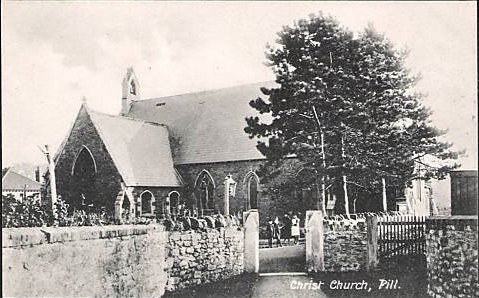
The first service was at 11.30am on 27th September 1860 and was attended by the Bishop and 18 robed clergy, being a combined service of Matins and Holy Communion, and the collection taken was £72 at a time when coal was 13 shillings (or 65p!) a ton! There was an account in the ‘Bristol Times and Mirror’ which said that after the service “a large and distinguished company partook of an elegant cold collation which was served by Pomeroy of Clifton”. That tradition is still carried on whenever there is a special event in the church but now it takes place in the Church Rooms.
The Sunday School at that time was held in the Benevolent School next door (built in 1854 for boys, girls and infants).
Construction
The church was built of stone brought from Nailsea by Mr G Wilde whose daughter was the late Mrs Alice Oram and whose husband became a churchwarden in 1927. He held one office or another in the church until his death, but he was chiefly remembered as organist and choirmaster to hundreds of boys. Mr and Mrs Oram’s daughter, Dorothy, was a member of the congregation until her death in September 1987.
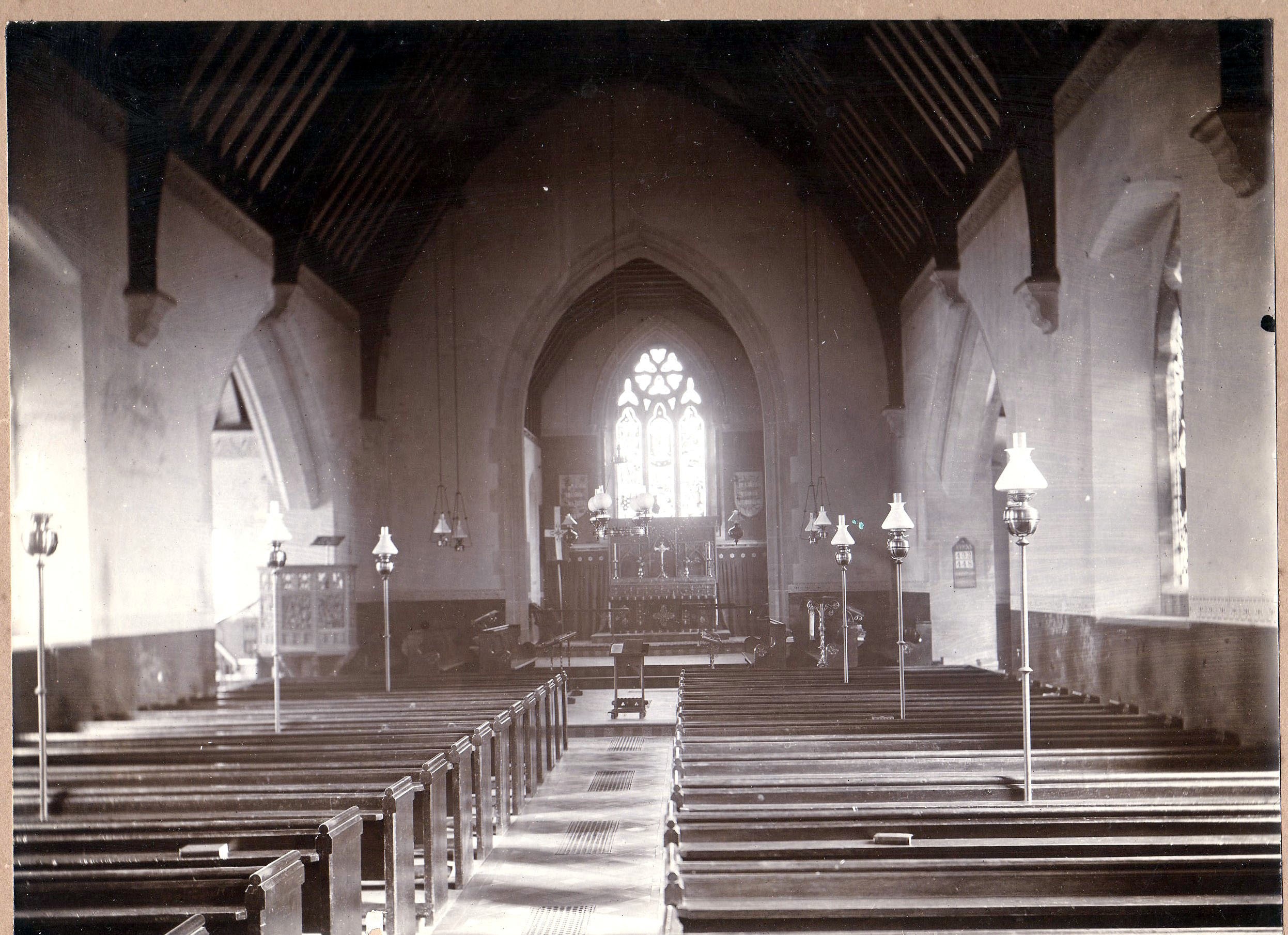
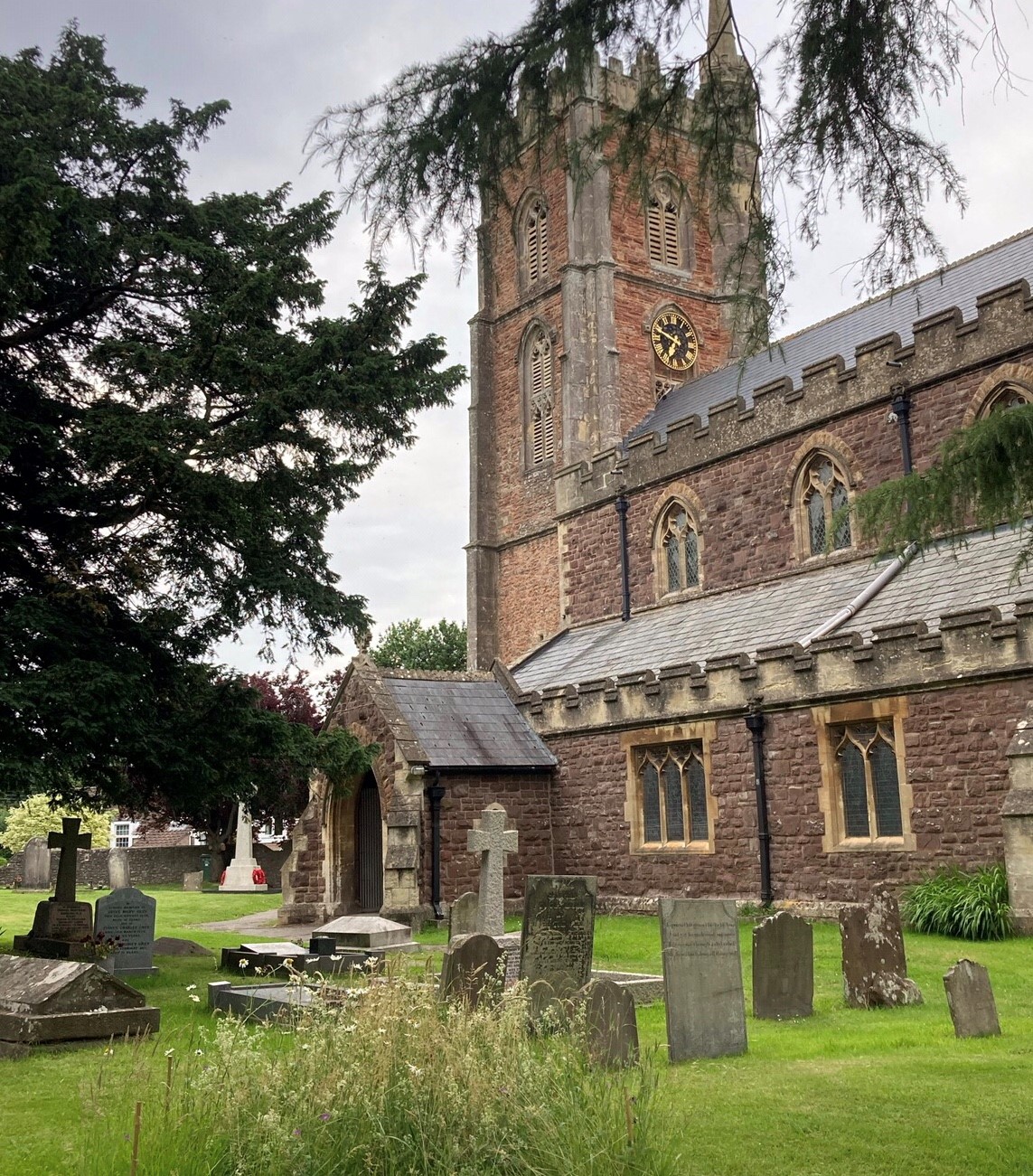
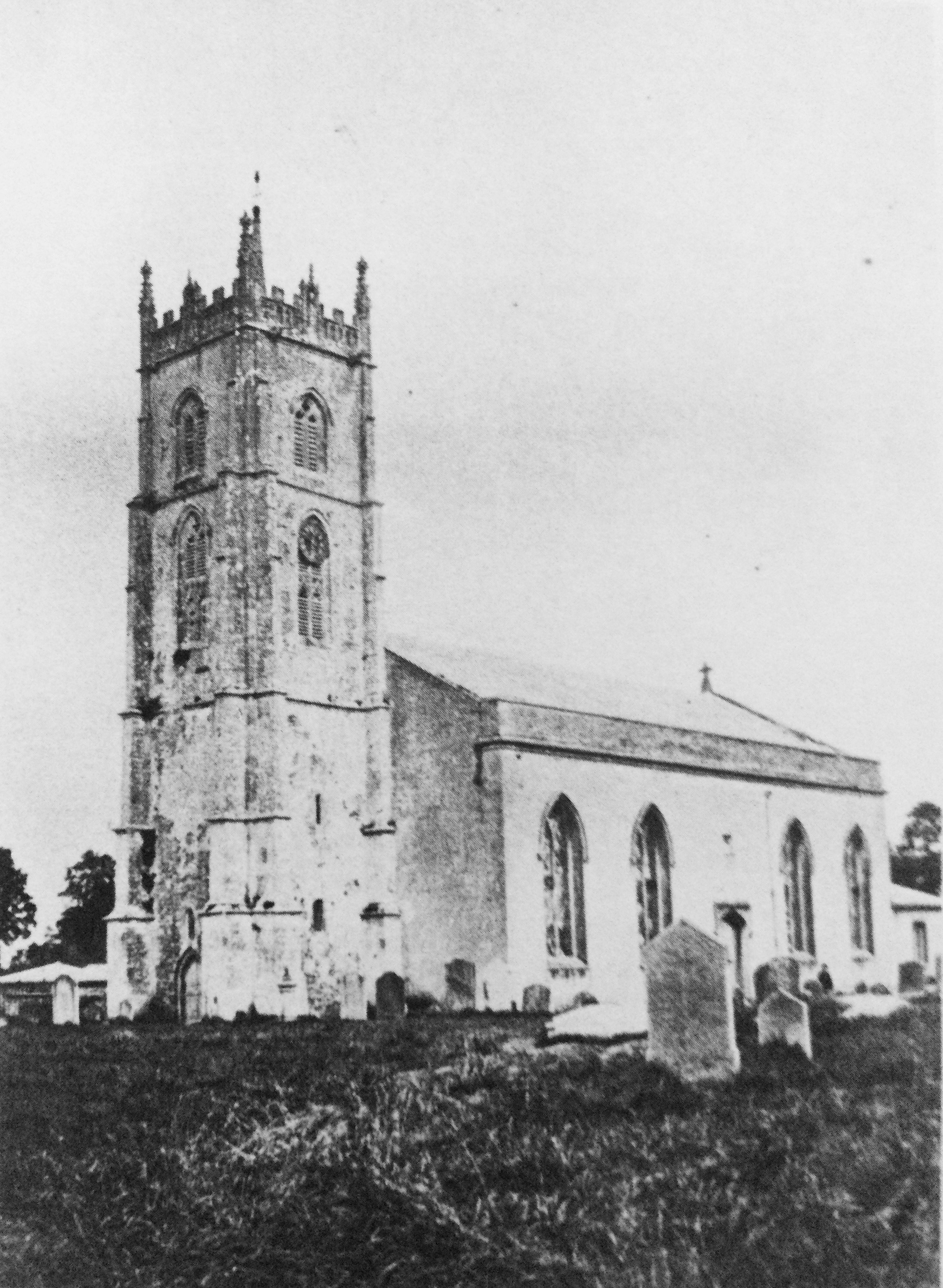
Christ Church was a cruciform building in the decorated style consisting of chancel, nave, transept, porch and an eastern turret with one bell (in 1873 the bell ringer, Thomas Ray, was appointed and was paid £1 per annum). The roof was supported internally by wooden beams. In 1865 it cost £60 to paint and decorate the body of the church, the cost being met by Sir William Miles Bt.
A porch and choir vestry were added in 1885 at the west end. This replaced the original porch which had been in the middle of the nave on the north side. At the same time the baptistery and West window were added in memory of William Henry Miles of Ham Green House (which became part of Ham Green Hospital) who had been Churchwarden and a generous benefactor – in 1879 Miles had provided the heating apparatus in the church, in 1880 a fine, small two-manual organ by Vowles of Bristol which was sited in the entrance of the South Transept, together with an old chest in which the music was kept, and in 1882 the pulpit.
(Note: the organ blower was paid 30 shillings a year or £1.50).
In 1885 the church, including the organ, was insured for £1,500 but by 1902 this was increased to £2,000 plus £500 for furniture.
Windows
There were several stained-glass windows in the church, most of which appear to have been made by Joseph Bell & Son of Bristol.
East End (1876-77) On either side of the Victorian Gothic window (3 lights or panels) showing Christ in Majesty flanked by angels. Above the Nativity scene were painted murals of the archangels against a background of sprays of leaves, with cherubim above them.
West End (1889) 4 lights:
Top right: “Touch me not” – Mary Magdalene and Our Lord.
Top left: “Lord, if thou had’st been here my brother had not died”.
Mary meeting Christ after Lazarus’ death.
Bottom right: Christ blessing the little children.
Bottom left: The baptism of Our Lord.
In memory of William Henry Miles
Chancel, North Side (1887) 4 lights:
The Marriage Feast at Cana;
Turning the Water into Wine at the marriage at Cana;
The Scene at Bethany (Martha calling Mary);
The Sepulchre “He is not here but risen”.
In memory of Agatha Mary Miles
Chancel, South Side
Christ seated on the Throne of Glory
In memory of Edith Moore
Nave, South Side 2 lights:
(1) Home at Nazareth, the Carpenter’s Shop.
In memory of Benjamin Pearce
The Annunciation of Our Lady
In memory of Eliza Pearce
(2) (1 light)
The Presentation of Christ in the Temple.
In memory of John Baker, Charles Baker and
Fanny Maria Baker
There were several mural tablets in memory of the following:
Sarah Elizabeth Brown Elizabeth Ann Brown
Laura Simpson Brown Sgt Walter Ernest Pearce
John Oram Walter R Linford
Francis Parnell Smith Maggie Unity Smith
Over the archway to the Chancel was the inscription “The Lord is in His Holy Temple”. Three rows of choir stalls provided for a large choir of men and boys whilst for the congregation there were 15 rows of wooden pews on either side of the nave and others in the North Transept. The South Transept behind the organ was curtained off and had old wooden seats.
The wooden altar needed no frontal as both it and the reredos behind had three decorated panels which a later vicar, in 1919, complained could not be seen for the candlesticks which had been given by H M Gibbs of Barrow Court in 1910.
Churchwardens
The first Churchwardens were Mrs Miles and George Wilde who were replaced at the first Vestry Meeting recorded on 13 April 1863 by W H Miles (minister’s Churchwarden) and Sidney Lloyd (Parishioners’ Churchwarden)
Support of the Church
Until 1868 the church was maintained by the Church Rate of three pence (1.5p) in the pound but in 1863 “certain ratepayers were summoned for default of paying the Church Rate” and though the Parishioners’ Churchwarden was instructed to apply to the Churchwardens of St George’s “on the subject of certain rents of Houses termed the Poor Houses and to take such steps as may be necessary in order, if possible, to obtain a proportion of the said rents for the expenses of the Church at Pill” and again at the Vestry Meeting on Easter Monday, 22nd April 1867 “to apply for a fair proportion of the yearly rents received from the Poor Houses in St George’s parish which are alleged to be applied by them to the purposes of St George’s Church in assistance of the Church Rate”, the application was refused on 14 April 1868 as they did not “consider that the parishioners of the Consolidated Chapelry of Pill have any claim in the matter”.
In December 1868 it was decided to commence a Subscription List in lieu of the usual Church Rate but, needless to say, this soon proved insufficient and in the following year collections were started. At first these collections were monthly but by 1876 these were taken weekly. It was noted that in 1868 Holy Communion was only celebrated 15 times, presumably once a month and perhaps extra at Christmas and Easter.
Church Life
Throughout the years the church continued to flourish. The first Parochial Church Council was appointed in April 1908 – 12 members excluding the clergy and three members as the Vicar thought fit, with the churchwardens to be ex-officio members elected annually. Meetings were held quarterly.
There was a thriving Sunday School (held in the afternoons), Mothers’ Union, Communicants’ Guild, Men’s Club, Working Party, Women’s Help Society, Male Voice Choir, Boys’ Club, Jumble Sales and Sales of Work, Socials and Concerts, with support given to the SPG, Missions and Waifs and Strays
The magazine of October 1928 shows that Harvest Festival was held on Thursday, 4th October with Holy Communion at 8am and Festal Evensong and Sermon at 7.30pm, the preacher being Rev J E S Harrison, Vicar of Yeovil, and a Social Gathering was held in the Church Rooms afterwards to which all adults were invited.
Harvest Services the following Sunday – Holy Communion at 8am and noon, Children’s Flower and Gift Service at 3pm and the usual services at 11am and 6.30pm, the collections at these services being in aid of Bristol General Hospital.
Compare this with “the sixteenth anniversary of the Consecration of the Church in 1876 which was commemorated, and thanks offered for the Harvest on Wednesday, 27th September, with a service at 4pm, preacher Rev Robert Lawson, MA, the offertory being for the Diocesan Church Building Society. Tea was provided in the Parish Room (on the site of the Church Rooms which is now the site of the Pill Clinic) at 5pm. Tickets one shilling (5p) each to be obtained from Mr Baker at the Post Office up to Tuesday evening”.
The War Memorial
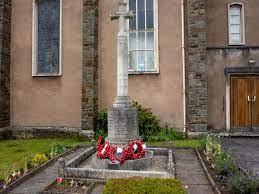
The War Memorial was erected by public subscription in 1920 with the names of those who gave their lives in the Great War inscribed on its base. Later the names of those who died in the 1939-1945 war (Second World War) were added.
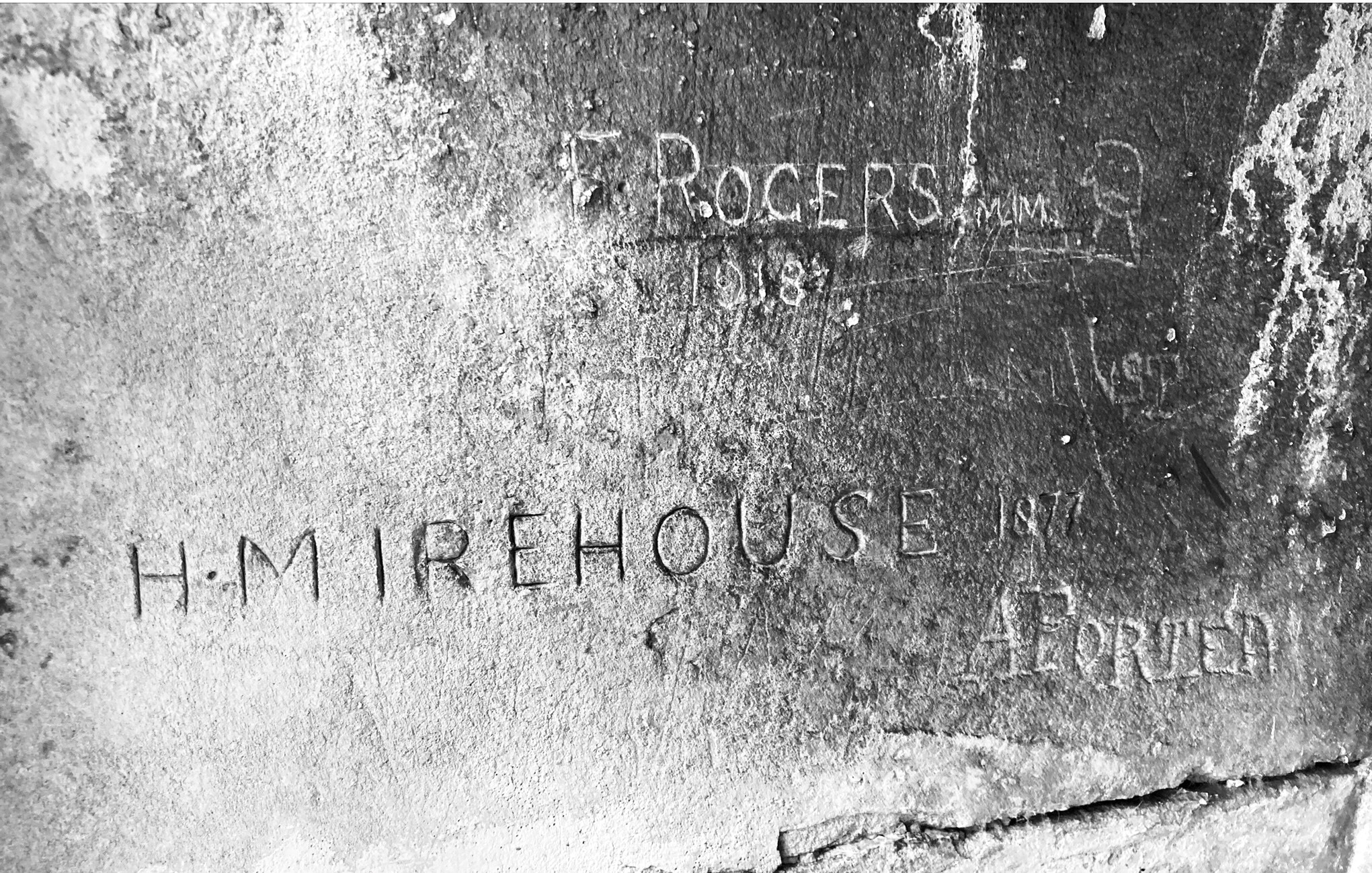
It is interesting to note that according to the Minute Book “on 18th May 1918 the Vicar (Rev R G Griffiths) departed for France.”
The Vicarage
Originally the Vicarage was Heywood Hall, the property of James Adam Gordon, the Lord of the Manor, and in 1848 the home of Rev John Ashley who founded the Mission to Seamen. It was an impressive double-fronted Georgian house, three storeys high, fronted by a sweeping drive, with conservatory and coach-house and extensive grounds (two acres) with many fine trees including mulberry tree at the rear. However, by the mid 1920s dry rot had set in an in 1928 the Vicar reported that “The actual commencement of the (repair) work is in sight. The real trouble lies in the fact that it is a matter which needs a very great deal of financial assistance from outside and before this assistance is forthcoming several official sanctions are necessary which means a long and slow process”. Nevertheless, by 25th April 1930 the remodelling had been accomplished. Presumably the original building had had to be demolished and a new Vicarage built on the same site although the grounds of this new Vicarage were gradually reduced – in Lodway the walled garden that was used by Mr W Sambourne as a market garden and nursery was sold as building land for houses, the land at the rear was purchased by the District Council for the erection of bungalows at Sambourne Lane and then later still, in the 1960s, a plot of land on the south side of the garden was sold for building.
The vicarage was demolished in 2014 and new homes to rent for local people constructed by Alliance Homes; the new development is known as Old Vicarage Close.
To come to more modern times
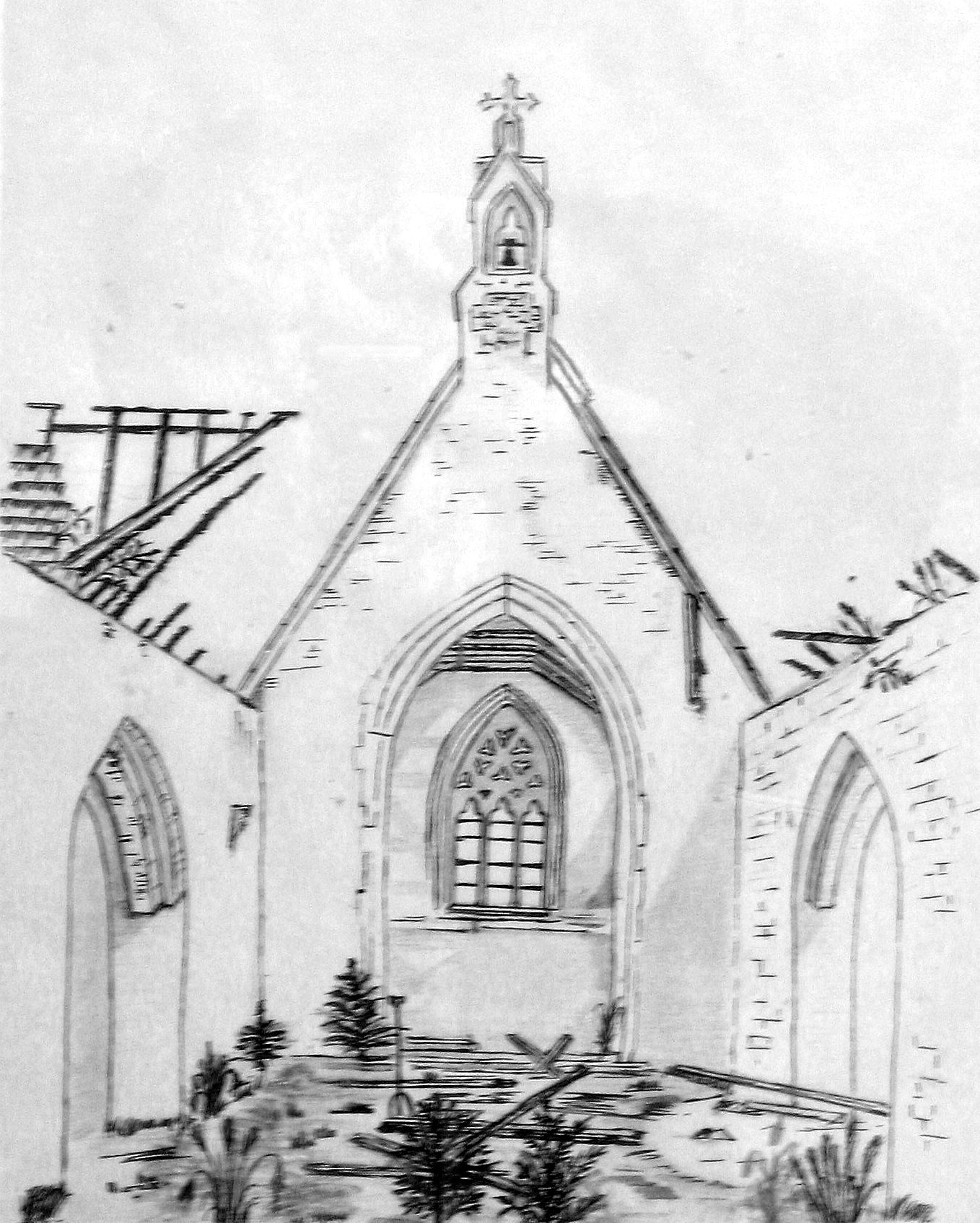
The ‘old church’ served the parish well until that fateful night of 16th January 1941 in the Second World War when, during an air-raid, an incendiary bomb lodged in the organ pipe of the church and the whole church burned down as people stood in thick snow and ice watching and weeping. We were lucky to save the plate and registers, the choir robes and some music and the umbrella stand. Later, the heads of the Churchwardens’ staves and the font ewer were recovered from the ashes. The Clergy Vestry door and the bell (cracked) were also saved and both were used in the new church.
Church Rooms Licensed
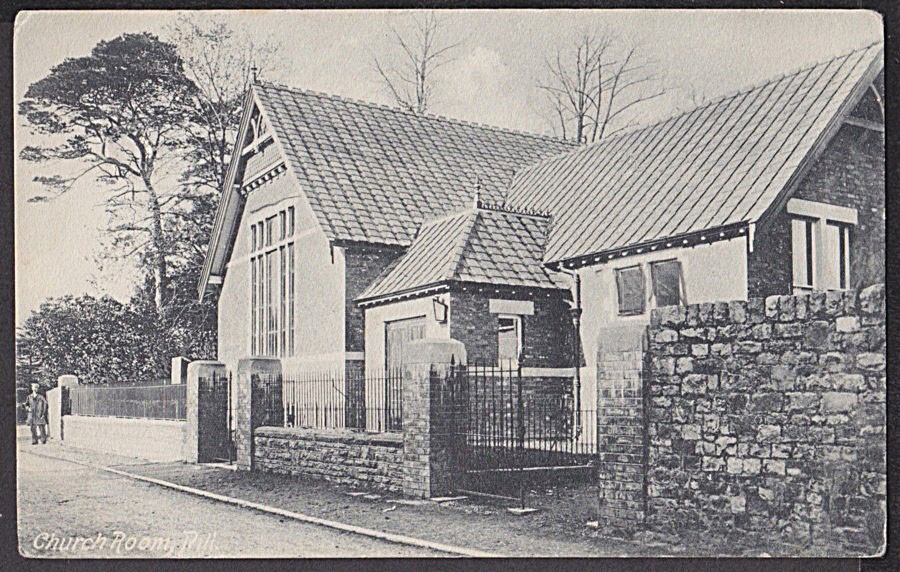
As we were without a church, in February 1941 the Bishop licensed the Church Rooms (which had been proposed to replace the wooden one in 1903 and built in 1905, for which the Orams had held many pantomimes and concerts to raise money, together with public subscription towards the cost) for public worship. At that time there was disagreement with the incumbent and so very few people attended until 1952. It was during this period that the congregation dwindled away, taking the children with them. Some went to St George’s, others to the non-conformists, which accounted for the lack of that age group in the years to follow. In 1952, however, the new Vicar, Rev R Hayes Treen, seemed to bring new life to the church. It might possibly have been the aftermath of the war years, but services were well attended – baptisms, weddings and confirmations all being held in the Church Rooms. The stage was the Sanctuary with a heavily carved wooden sideboard loaned by Mr Withers as the altar. Steps led from the centre of the stage to the choir stalls and communion rail, the font was a small china bowl on a tall wooden stand at the back of the Hall and the Vestry was what later became the kitchen. These were make-shift conditions but there was a warmer comradeship than ever experienced before or since. A real feeling of “Let’s get going and rebuild” emerged and a petition requesting a new church was taken all round the village asking people to sign.
Rebuilding
So it was that on 27th April 1957 the Bishop of Taunton, Rt Rev M A Hodson MA, laid the foundation stone of the present building which was consecrated on 23rd May 1958 by the Bishop of Bath and Wells, Rt Rev H W Bradfield (who had officiated at the coronation of Queen Elizabeth II). The original tender for the work was £36,769 but we were fortunate to be able to claim War Damage Compensation and also £500 that was made available from the Canadian War Damage Appeal. We had to raise the money for the furnishings which amounted to £10,000 but we discovered that we had many friends.
The new church was built on the exact foundations of the old church and, unfortunately, some of the old stones were used. This has resulted in problems as these stones are porous and now damp patches are coming through as a result.
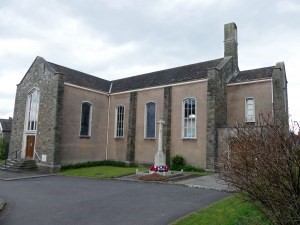
The new church was designed by Mr C R Beecroft FRIBA of Beecroft, Bidmead and Partners who had local connections (his father was once the chemist in the village) and it was built by Messrs William Cowlin of Bristol. Materials were brought from all over the country: The stone came from quarries at Portishead, the Forest of Dean and Cheddar. The surrounds of the doors and windows are Portland stone. Yorkshire paving stone was used in the Chancel and Sanctuary and the font stood on a base of Welsh slate and was cut from a block of Clipsham stone which was a six-foot cube. The wood used throughout the church was Iroka (an African teak). Heating was provided via tubular electrical heaters under the pews and at the top of the walls and the ceiling was finished with acoustic plaster – although, judging from the number of complaints about the acoustics, this seems hard to believe!
Donations to the Church
Many gifts were donated to the church: The wooden cross and candlesticks in the Chapel were given by Ham Green Hospital from their old Chapel when the new St Luke’s Chapel was built there. The painting of The Last Supper, an original by the Italian artist Guiseppe Chiaro, was brought to this country in 1716 and was donated to Christ Church by Lady Gurney in 1958. The lectern came from the parish of All Saints, Woodley, Berkshire and the Litany desk from Holy Trinity, Bath. The silver cross and candlesticks (together with all the fittings in the Chapel) were the gift of Mr Edgar Jefferies and were made in Clevedon by Mr C Broome, whilst the organ console was given in memory of his wife by Mr Joseph Parsons who was the Churchwarden (the organ itself, placed in the organ loft with the detached console in the North Transept behind the choir, was built by Percy Daniel Ltd of Clevedon). At a later date the crucifix on the West wall was a gift from Rev Alex Barton Dawes when he retired, as were the two wooden floor-standing candlesticks. The processional cross was donated by Mr Fred Dickens in memory of his father and the two sanctuary chairs were the gift of Mrs E Hunt and her brother, Mr Bull. We were also pleased to receive various items from a redundant church in Bristol (St Andrew’s, Montpelier). These included the six brass candlesticks and an altar cross, a processional cross and a wooden cross. We kept the candlesticks and the altar cross but as we had already been given a processional cross and a wooden cross, we passed the processional cross from St Andrew’s to Failand Church and the wooden cross to the Pill Union (Baptist) Church where it hangs above the pulpit.
Stained Glass Windows
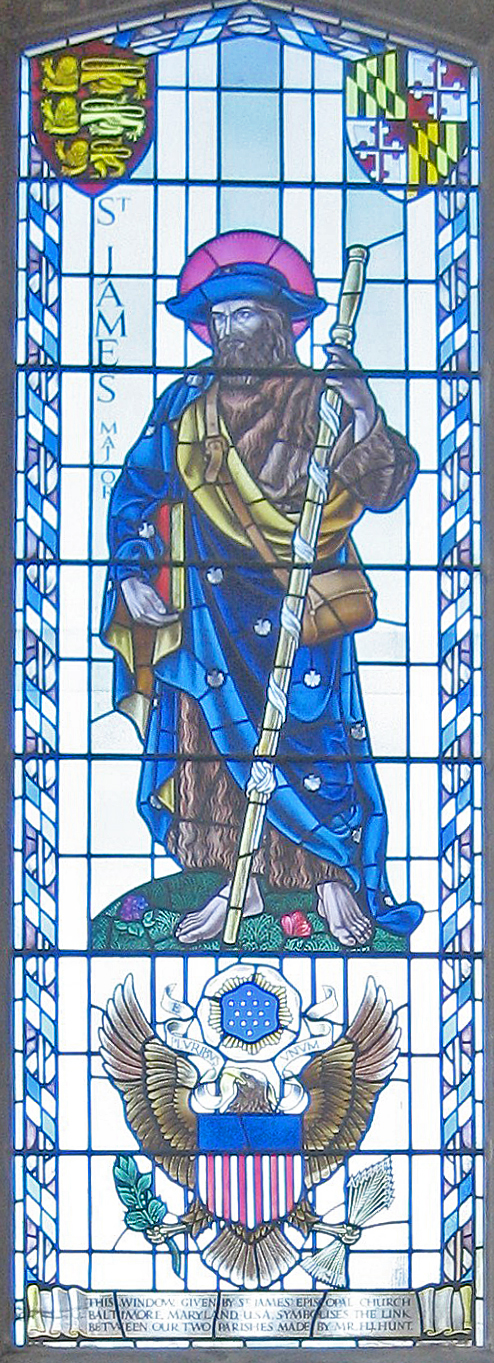
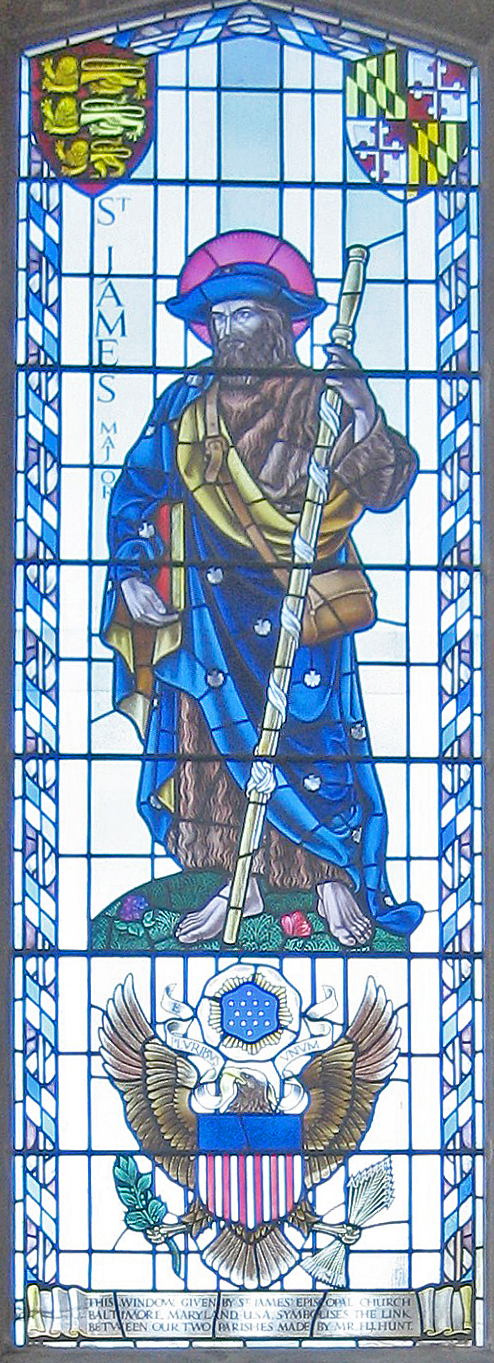
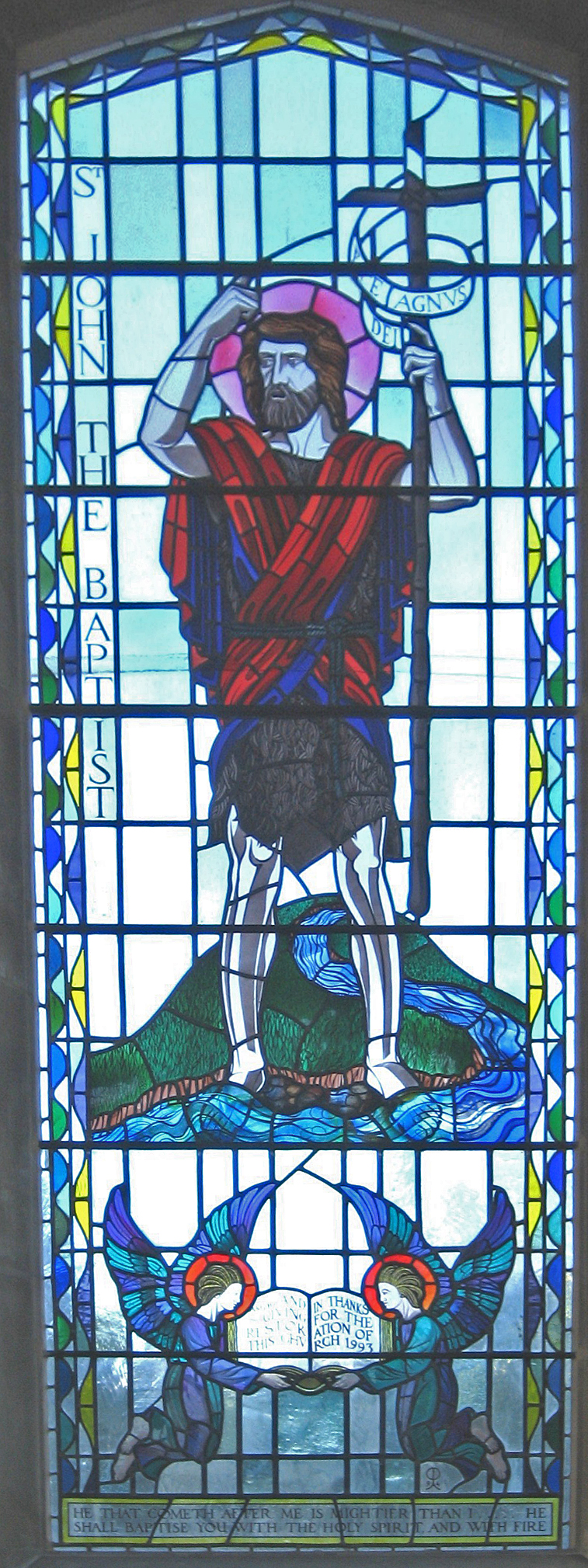
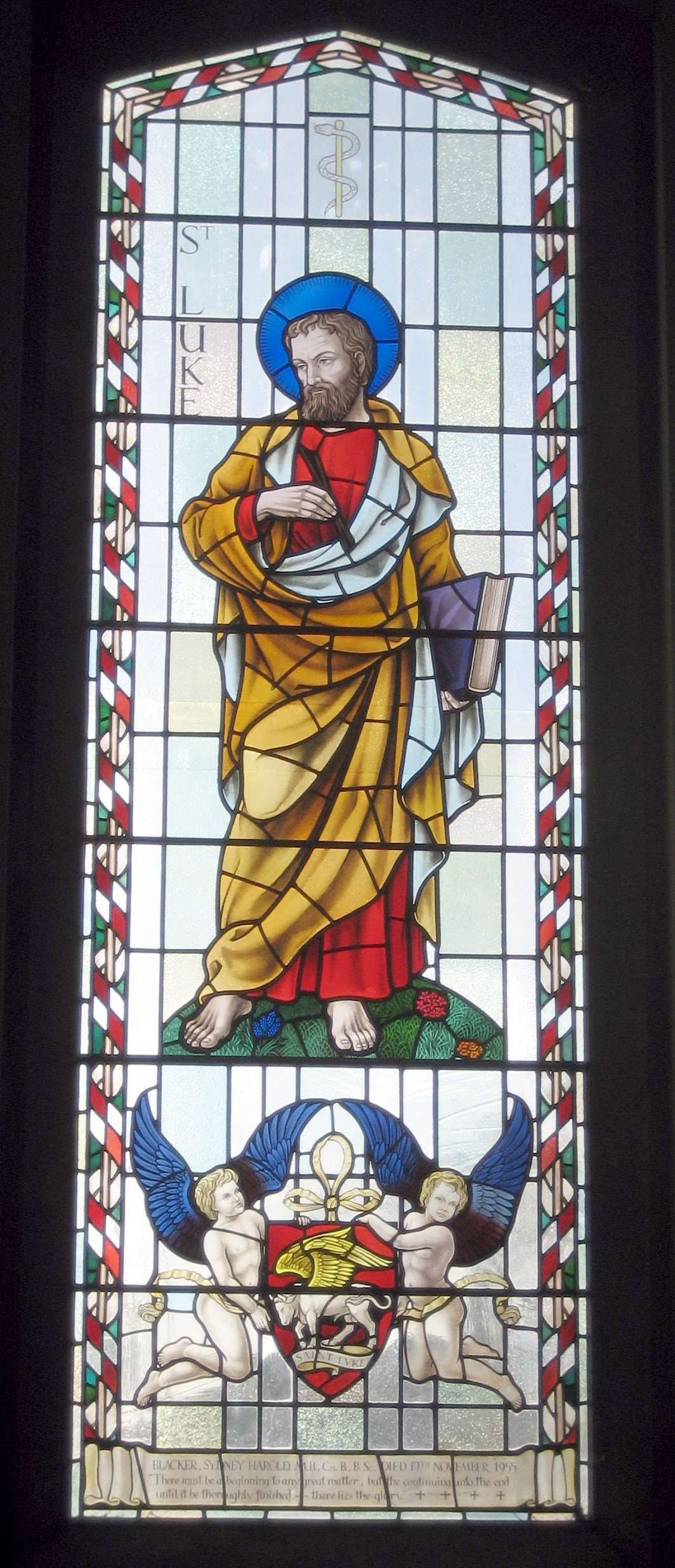
All these were made by Joseph Bell of Park Street, Bristol, who made those in the old church. The East window which cost £800 depicts Christ in Majesty surrounded by the Cherubim. The others represent saints: St Luke, in the middle window of the Nave (South) was given by Mrs Blacker in memory of the late Dr Blacker, the local doctor. The window facing it depicts St Nicholas and was given by Mrs Fay Wall in memory of her mother and family. The window in the Chapel, St James, was donated by the members of St James’ Episcopal Church in Baltimore. The window in the North Transept depicts John the Baptist and its installation marked the completion of restoration work carried out between 1985 and 1994 (see paragraph headed Restoration Committee).
The American Connection
Perhaps the most unexpected gift was the stained-glass window in the Chapel with the American flag, the Stars and Strips, draped beneath it.
As previously mentioned, the Chapel itself was furnished by the generosity of Mr E Jefferies as a memorial to his friend, Mr Joseph Hunt, a black teacher from Baltimore, USA, who taught at the Gordano School and was a much liked and respected member of the Church Council at Christ Church. As a further memorial to him his friends at his old church, St James’ Episcopal Church in Baltimore, sent the money for a stained-glass window to be installed in the Chapel and Father Cedric Mills, their priest (who later became the Bishop of the Virgin Islands) came with his wife to Pill for the consecration service. For the occasion Mr Jefferies draped the flag across the window and Mr Treen, the Vicar at Christ Church, like the idea so much that it stayed.
We in our turn collected the fragments of stained glass from the blitzed East window and had a window designed and made by Messrs Joseph Bell of Bristol, which was shipped out to St James’ Episcopal Church, Baltimore.
Since that time we have kept in touch with that parish and in 1975 there was an exchange of pulpits when our own vicar, Rev Lionel Bowen, and Mrs Bowen went to Baltimore and Father Donald Wilson and his daughter, Juana, together with some members of his congregation came and stayed in Pill. This was a very successful visit, both socially and within the church and was followed up in 1977 when Mr Bowen made another visit to them when he preached both in Baltimore and in New York. He took with him a rose bowl as a gift from Christ Church as they had presented our church with a replacement flag because the original had become rather shabby.
Centenary Festival
In 1960 a festival was held to commemorate the consecration of the church in Pill, to which representatives of the Merchant Venturers Society, the Bristol Chamber of Commerce and the Haven Master attended, as they had done 100 years previously.
Following Harvest Festival on Sunday, 25th September 1960, when the preacher at Evensong was Rev P D Preston, a former vicar at Pill, services were held on each day of the week, including a 24-hour Vigil and Day of Prayer, and on 27th September the 100th Anniversary Celebrations included services for the Infant and Junior Schools, Matins at 6.15am, Holy Communion at both 6.30am and 11am and Festal Evensong sung by the combined choirs of St George’s, Portbury and Christ Church (Stanford in B flat – Magnificat, Nunc Dimittis and Te Deum, and the anthem “O Clap your Hands” by Stainer), the preacher being Ven E A Cook, Rector of Bath Abbey and Archdeacon of Bath.
Later, in 1983, the 25th Anniversary of the consecration of the new church was commemorated with a service to which all those clergy who had served since the church’s opening were invited to meet past and present parishioners.
Restoration Committee.
In the early 1980s some damp patches became apparent in the church interior, over the right-hand side of the chancel end wall, on the South Transept wall, and at the West end of the church on the upper left hand side of the organ opening. Our church architect was consulted, and investigations revealed that there was some rot in the ends of some roof timbers, and that damp was penetrating the solid end walls because over hard mortar had developed hairline cracks. A Church Restoration Committee was set up by John Lodge in 1985 with the remit of raising the money needed to rectify these faults in church construction. Between 1985 and 1994, the restoration committee achieved a target of over £31,000, and restoration was completed in two phases. The first phase replaced faulty roof timbers and used lead shoes to isolate the treated timber from the damp masonry. A second phase of restoration stripped plaster off the south transept wall, and replaced it with a water-resistant plaster, cut off the old finlock gutters which were degrading and replaced them with cast iron gutters, pointed defective walls, and installed damp proof courses to prevent damp penetration. Works were finished in 1993 by Fishers (phase 1) and Stansalls of Wells (Phase 2). The completion of the restoration was marked by the installation of a stained-glass window in the North Transept of John the Baptist, from Joseph Bell.
Garden of Remembrance
As Christ Church had no provision for interments, which are still carried out at St George’s, a faculty was obtained in 1975 for part of the churchyard on the South side of the church to be dedicated as a Garden of Remembrance where the remains of loved ones, no matter what their denomination within the parish, can be laid to rest following cremation.
The Church Rooms and Church Room
The church rooms were used in the 1960s and 1970s for church functions, for dinners, fairs and also as the venue for youth group meetings. Pill Badminton Club hired the main hall there for weekly sessions. Unfortunately, the fabric of the building deteriorated and by 1989 damp was penetrating the roof and dry rot had affected the woodwork in the building to such an extent that the PCC were warned that the building was becoming unsafe, and it would cost more than £40,000 to restore it to a useable state. Given the financial climate the PCC was left with little alternative but to close the building. The site was offered for sale and purchased for a sum of £40,000 by Avon Healthcare Trust. This money was transferred to the Church Commissioners under the terms of the Charity Act, as the building was under trust. The Church Rooms building was demolished, and a new healthcare centre erected on the site. The money resulting from the sale was later released under the terms of the trust for creating the Church Room, a social and worship area at the rear of Christ Church.
The church is indebted to Stephen Sharples, our church lay worker between 1995 and 1998, who facilitated this conversion with his expert legal knowledge and enthusiasm. Quotes for constructing the church room were accepted in 1997 and the completed package was opened in 1998 by the Archdeacon, Ven Robert Evens. The Church Room project included kitchen facilities, upgrading the toilet, and installing a sound system in the church.
Recent history
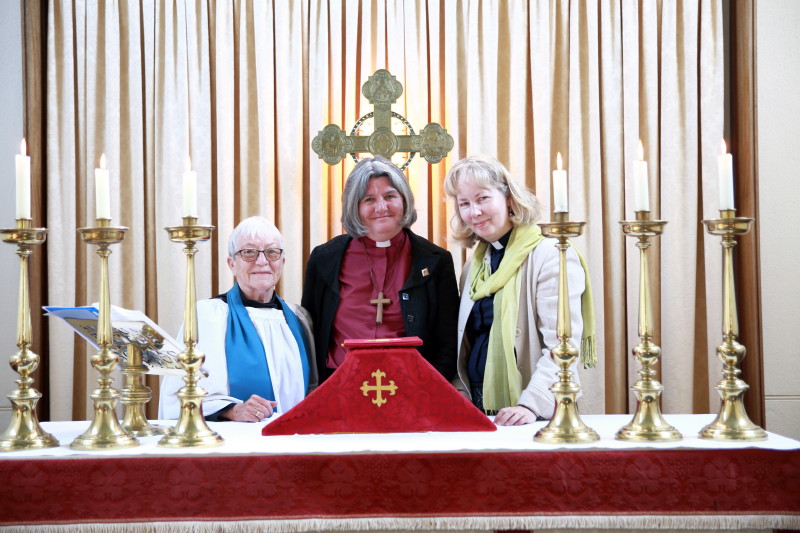
• Revd Ruth Legg was incumbent from …. until…… Ruth was one of the first women to be ordained priest. She was succeeded by Revd Astrid Tiesema-Samson in 2018 (?), the current incumbent.
• January 2016 saw the 75th anniversary of the destruction in war of the first Christ Church and this was commemorated with a exhibition and a service for peace.
• 2018 marked the 60th anniversary of the rebuilt church being consecrated. There was a special service to commemorate this led by the Bishop of Taunton,
ACKNOWLEDGEMENTS
First Edition
Margaret Bunce (Secretary to the Parochial Church Council 1968-1988) prefaces the first edition in 1989 thus: “I have tried to record the history of Christ Church to the best of my ability whilst there are still others who can recall the old church and might possibly correct or add to the information.
I am indebted to the late Miss D Oram whose pictures and notes acted as a spur to my interest, to Mr G K Robinson of Joseph Bell and Son for details of the stained-glass windows, and for information gained from Eva Wigan’s “Tales of Gordano”, “Kelly’s Directory of Somerset”, and the Church Records”
Second Edition
The Second Edition of the short history has been brought into the computer age and updated to reflect happenings within the last 19 years. This edition has been produced to mark the 50th Anniversary of the re-consecration of Christ Church after the war by Janet Green (Treasurer) and David Yates (Churchwarden) 2008.
Third Edition
Minor amendments and additions made by PCC members in 2024.